
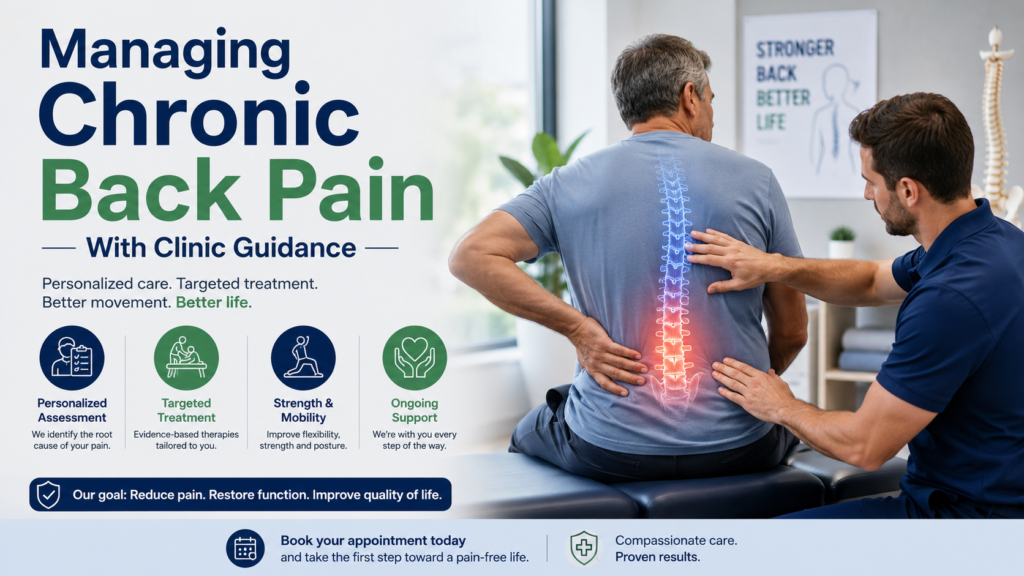

Learn how managing chronic back pain with clinic guidance can improve mobility, reduce discomfort, and enhance quality of life. Discover causes, treatments, prevention tips, and expert advice for long-term relief.
Chronic back pain is one of the most common health concerns affecting millions of people worldwide. Whether it develops due to poor posture, an old injury, a sedentary lifestyle, or age-related conditions, persistent back pain can significantly impact daily life. Simple activities such as walking, sitting, lifting objects, or even sleeping can become challenging when chronic back pain is left untreated.
Many individuals try home remedies, over-the-counter medications, or online exercises to manage their symptoms. While these approaches may provide temporary relief, chronic back pain often requires professional evaluation and treatment. This is where clinic guidance plays an important role. Healthcare clinics offer personalized assessments, evidence-based treatments, and long-term management strategies that help patients reduce pain and improve function.
This article explores the causes of chronic back pain, how clinics help manage the condition, available treatment options, and practical steps patients can take to maintain a healthy back.
Understanding Chronic Back Pain
Back pain is generally considered chronic when it lasts for more than 12 weeks, even after the initial injury or underlying cause has been treated. Unlike acute back pain, which usually resolves within a few days or weeks, chronic pain can persist and interfere with everyday activities.
The pain may occur in different areas of the back, including:
- Lower back (lumbar region)
- Middle back (thoracic region)
- Upper back (cervical and shoulder area)
Symptoms may include:
- Persistent aching or stiffness
- Sharp or shooting pain
- Muscle spasms
- Limited flexibility
- Difficulty standing or walking for long periods
- Pain that radiates into the legs or arms
Because chronic back pain can have multiple causes, professional diagnosis is essential for effective treatment.
Common Causes of Chronic Back Pain
Several factors can contribute to chronic back pain.
1. Poor Posture
Many people spend long hours sitting at desks, working on computers, or using smartphones. Poor posture places extra strain on the spine and surrounding muscles, leading to ongoing discomfort.
2. Muscle Strain and Overuse
Repeated lifting, bending, or physical labor can strain back muscles and ligaments. If not properly treated, these injuries may become chronic.
3. Herniated Discs
Spinal discs act as cushions between vertebrae. When a disc slips or ruptures, it can press on nearby nerves and cause persistent pain.
4. Arthritis
Conditions such as osteoarthritis can affect the spine and lead to inflammation, stiffness, and chronic discomfort.
5. Degenerative Disc Disease
As people age, spinal discs naturally wear down. This process may contribute to chronic pain and reduced mobility.
6. Sciatica
Sciatica occurs when the sciatic nerve becomes compressed or irritated, causing pain that travels from the lower back down the leg.
7. Lifestyle Factors
Obesity, lack of exercise, smoking, and prolonged sitting can increase the risk of chronic back pain.
Why Professional Clinic Guidance Matters
Many individuals attempt to manage chronic back pain on their own. While self-care strategies can help, professional clinic guidance provides several advantages.
Accurate Diagnosis
Healthcare providers conduct detailed evaluations to identify the underlying cause of pain. This may include:
- Physical examinations
- Medical history reviews
- Imaging tests such as X-rays or MRI scans
- Neurological assessments
An accurate diagnosis ensures that treatment addresses the root cause rather than simply masking symptoms.
Personalized Treatment Plans
Every patient experiences back pain differently. Clinics develop individualized treatment plans based on:
- Age
- Lifestyle
- Occupation
- Severity of symptoms
- Medical history
Personalized care often produces better outcomes than generic treatment approaches.
Ongoing Monitoring
Chronic pain management requires regular follow-up. Clinics track patient progress and adjust treatment plans when necessary to achieve optimal results.
Treatment Options Available Through Clinics
Healthcare clinics offer a wide range of treatments for chronic back pain.
Physical Therapy
Physical therapy is one of the most effective treatments for chronic back pain.
Therapists guide patients through exercises that:
- Strengthen core muscles
- Improve flexibility
- Enhance posture
- Reduce strain on the spine
For example, a software professional who sits for eight hours daily may benefit from posture correction exercises and stretching routines recommended by a physical therapist.
Medication Management
Clinicians may prescribe medications when necessary, including:
- Anti-inflammatory drugs
- Muscle relaxants
- Pain relievers
- Nerve pain medications
Medication is usually combined with other treatments rather than used as a long-term solution alone.
Lifestyle Counseling
Many clinics educate patients about healthy habits that support spinal health.
Recommendations may include:
- Maintaining a healthy weight
- Improving workplace ergonomics
- Increasing physical activity
- Quitting smoking
These lifestyle changes often reduce pain and prevent future problems.
Chiropractic Care
Some clinics offer chiropractic services that focus on spinal alignment and joint mobility. These treatments may provide relief for certain patients when performed by qualified professionals.
Pain Management Procedures
For severe or persistent pain, specialists may recommend procedures such as:
- Epidural steroid injections
- Nerve blocks
- Radiofrequency ablation
These treatments aim to reduce inflammation and interrupt pain signals.
Psychological Support
Chronic pain can affect mental health. Anxiety, depression, and stress often worsen pain symptoms.
Some clinics provide:
- Cognitive Behavioral Therapy (CBT)
- Stress management techniques
- Counseling services
Addressing emotional well-being can improve overall treatment outcomes.
The Role of Exercise in Managing Chronic Back Pain
Exercise is one of the most important components of long-term back pain management.
Many people avoid movement because they fear worsening their pain. However, inactivity can weaken muscles and increase stiffness.
Clinically recommended exercises may include:
Stretching Exercises
Stretching improves flexibility and reduces muscle tension.
Examples include:
- Hamstring stretches
- Knee-to-chest stretches
- Cat-cow stretches
Core Strengthening
Strong abdominal and back muscles provide better support for the spine.
Common exercises include:
- Planks
- Bridges
- Pelvic tilts
Low-Impact Aerobic Activities
These activities improve circulation and overall fitness without placing excessive stress on the back.
Examples:
- Walking
- Swimming
- Cycling
- Water aerobics
Patients should always follow exercise plans recommended by healthcare professionals.
Ergonomic Changes Recommended by Clinics
Many cases of chronic back pain are linked to poor workplace or home ergonomics.
Clinics often recommend:
Proper Sitting Position
- Keep feet flat on the floor.
- Maintain a neutral spine position.
- Use chairs with lumbar support.
Computer Setup
- Monitor at eye level.
- Keyboard positioned comfortably.
- Shoulders relaxed while typing.
Safe Lifting Techniques
- Bend at the knees.
- Keep objects close to the body.
- Avoid twisting while lifting.
These simple adjustments can significantly reduce stress on the back.
Real-Life Example of Successful Back Pain Management
Consider Raj, a 45-year-old office employee who experienced lower back pain for more than a year.
Initially, he relied on painkillers and occasional rest. Although symptoms improved temporarily, the pain always returned.
After visiting a healthcare clinic, Raj underwent a comprehensive evaluation. The clinic identified poor posture, weak core muscles, and prolonged sitting as contributing factors.
His treatment plan included:
- Physical therapy sessions
- Daily stretching exercises
- Ergonomic workplace adjustments
- Weight management counseling
Within several months, Raj reported reduced pain, improved mobility, and better overall quality of life.
This example demonstrates how professional clinic guidance can provide lasting results.
Preventing Future Back Pain
Even after symptoms improve, prevention remains important.
Clinics often recommend:
Stay Active
Regular physical activity helps maintain spinal strength and flexibility.
Maintain Healthy Weight
Excess body weight increases pressure on the spine and surrounding joints.
Practice Good Posture
Proper posture reduces unnecessary strain on muscles and ligaments.
Sleep on a Supportive Mattress
Quality sleep surfaces help maintain proper spinal alignment.
Manage Stress
Stress can contribute to muscle tension and worsen pain symptoms.
Attend Follow-Up Appointments
Regular clinic visits allow healthcare providers to monitor progress and address concerns early.
When to Seek Medical Attention
Patients should consult a healthcare professional if they experience:
- Pain lasting more than a few weeks
- Numbness or tingling
- Weakness in the legs
- Difficulty walking
- Loss of bladder or bowel control
- Severe pain that interferes with daily activities
Early intervention can prevent complications and improve recovery outcomes.
Sources
https://l1nq.com/1ve1nk0
https://sl1nk.com/7e790fz
Conclusion
Managing chronic back pain requires more than temporary symptom relief. While home remedies and self-care strategies may help, professional clinic guidance provides accurate diagnosis, personalized treatment, and ongoing support. Through physical therapy, lifestyle modifications, medication management, ergonomic improvements, and preventive care, healthcare clinics help patients achieve lasting pain relief and improved quality of life.
If chronic back pain is affecting your daily activities, seeking professional medical advice is an important step toward recovery. With the right guidance and commitment to treatment, many individuals can successfully manage their symptoms and enjoy a healthier, more active life.
FAQs
1. What is considered chronic back pain?
Back pain is generally considered chronic when it persists for more than 12 weeks despite treatment or healing of the initial injury.
2. Can chronic back pain be cured completely?
The outcome depends on the underlying cause. Many patients achieve significant relief and improved function through proper treatment and lifestyle changes.
3. Is exercise safe for people with chronic back pain?
Yes. Clinically recommended exercises can strengthen muscles, improve flexibility, and reduce pain. However, exercises should be performed under professional guidance.
4. When should I visit a clinic for back pain?
You should seek medical attention if pain lasts several weeks, worsens over time, or is accompanied by numbness, weakness, or mobility issues.
5. How do clinics diagnose chronic back pain?
Clinics use physical examinations, medical history reviews, imaging tests, and neurological assessments to determine the cause of pain.


