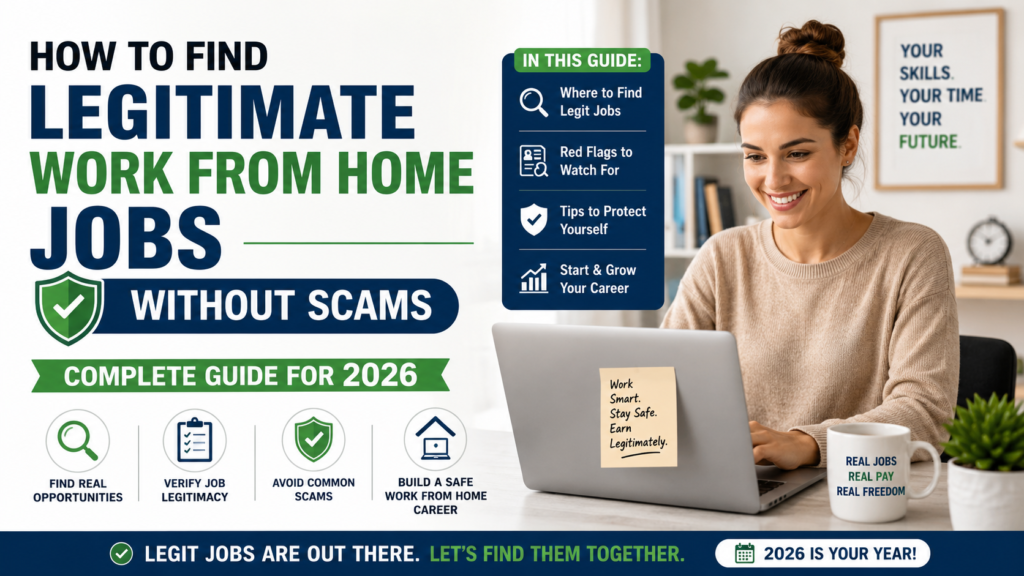

Learn how to find legitimate work from home jobs without falling for scams in 2026. Discover trusted job platforms, warning signs of fraud, and practical tips to secure genuine remote work opportunities.
Working from home has become more popular than ever. In 2026, thousands of companies across the world offer remote positions that allow employees and freelancers to work from the comfort of their homes. From customer support and content writing to software development and virtual assistance, remote work opportunities continue to grow.
However, along with genuine opportunities, online job scams have also increased. Many people searching for work-from-home jobs become victims of fake recruiters, fraudulent companies, and misleading job advertisements. These scams can result in financial loss, stolen personal information, and wasted time.
The good news is that finding a legitimate work-from-home job is possible if you know what to look for and how to avoid common scams. This guide will help you identify genuine opportunities, recognize warning signs, and successfully secure a remote job in 2026.
Why Work From Home Jobs Are Growing in 2026
Remote work is no longer just a temporary trend. Businesses have realized that remote employees can be productive, cost-effective, and flexible. Many companies now hire talent from different cities and countries without requiring relocation.
Some major reasons for the growth of work-from-home jobs include:
- Increased digital transformation
- Better communication and collaboration tools
- Reduced office expenses for employers
- Greater work-life balance for employees
- Access to global talent pools
As a result, industries such as technology, education, marketing, customer service, finance, and healthcare continue to offer remote opportunities.
Common Work From Home Job Scams
Before searching for jobs, it’s important to understand the most common scams.
1. Upfront Payment Scams
A fake employer asks you to pay registration fees, training fees, software charges, or security deposits before starting work.
Legitimate employers do not ask candidates to pay money to get a job.
2. Fake Data Entry Jobs
Scammers promise huge earnings for simple data entry work. After registration, they either disappear or impose impossible targets and penalties.
3. Fake Recruitment Emails
Fraudsters send emails claiming to represent well-known companies. They may ask for personal information, bank details, or identity documents.
4. Pyramid Schemes
These schemes focus more on recruiting new members rather than offering actual work opportunities.
5. Check Deposit Scams
A scammer sends a fake check and asks you to deposit it and transfer part of the money elsewhere. Eventually, the check bounces and you lose money.
Signs of a Legitimate Work From Home Job
Knowing the characteristics of genuine jobs can help you avoid trouble.
Clear Job Description
A legitimate employer clearly explains:
- Responsibilities
- Required skills
- Working hours
- Salary structure
- Employment terms
Professional Company Website
Check whether the company has:
- A professional website
- Contact details
- Business address
- Social media presence
- Employee information
Proper Interview Process
Real employers usually conduct interviews through video calls, phone calls, or formal recruitment platforms.
Company Reviews
Search online reviews from current and former employees. Multiple positive reviews can indicate legitimacy.
Written Offer Letter
Legitimate employers provide official offer letters and employment contracts.
Best Places to Find Genuine Remote Jobs
Finding remote work becomes easier when you use trusted platforms.
LinkedIn remains one of the best platforms for professional networking and remote job opportunities. Many verified companies post jobs directly on their official pages.
Indeed
Indeed offers thousands of remote job listings across multiple industries and experience levels.
FlexJobs
FlexJobs specializes in remote, hybrid, and flexible jobs. Every listing is reviewed before publication.
Remote.co
Remote.co focuses exclusively on remote work opportunities from verified employers.
We Work Remotely
One of the largest remote job boards, offering opportunities in technology, marketing, customer support, and more.
Upwork
For freelancers, Upwork provides legitimate opportunities in writing, design, programming, and consulting.
Fiverr
Fiverr allows freelancers to offer services and build long-term client relationships.
How to Verify a Company Before Applying
Taking a few minutes to research can save you from major problems later.
Check Company Registration
Search for business registration details and verify whether the company legally exists.
Review Social Media Presence
Active social media accounts often indicate a genuine business.
Search Employee Profiles
Look for company employees on LinkedIn. Genuine companies typically have visible staff profiles.
Verify Contact Information
Ensure that email addresses come from official company domains rather than free services like Gmail or Yahoo.
Read Online Reviews
Check reviews on Glassdoor and other employment websites to understand employee experiences.
Red Flags You Should Never Ignore
If you notice any of these warning signs, proceed carefully.
Unrealistic Salary Promises
Claims such as earning ₹1 lakh per week without experience should raise suspicion.
Immediate Hiring Without Interview
Most reputable companies conduct some form of assessment or interview.
Requests for Bank Information Early
Employers generally collect banking details only after official hiring.
Poor Communication
Frequent grammar mistakes, vague answers, and inconsistent information may indicate fraud.
Pressure to Act Quickly
Scammers often create urgency to prevent candidates from conducting research.
Skills That Increase Your Chances of Getting Remote Jobs
Employers often prefer candidates who can work independently and communicate effectively.
Some in-demand remote work skills include:
- Content writing
- Digital marketing
- Graphic design
- Video editing
- Customer support
- Social media management
- Virtual assistance
- Programming
- Data analysis
- Project management
Improving these skills can significantly increase your chances of landing a legitimate remote position.
Creating a Strong Remote Job Application
Build a Professional Resume
Highlight:
- Relevant skills
- Remote work experience
- Technical knowledge
- Communication abilities
Create an Optimized LinkedIn Profile
A strong LinkedIn profile can attract recruiters directly.
Prepare a Customized Cover Letter
Tailor your application to each position rather than sending generic applications.
Showcase Your Portfolio
Writers, designers, developers, and marketers should maintain portfolios demonstrating their work.
Tips for Staying Safe During the Hiring Process
Follow these practical safety measures:
- Never pay money for job opportunities.
- Avoid sharing sensitive personal information too early.
- Research every employer thoroughly.
- Use secure communication channels.
- Verify job offers independently.
- Trust your instincts if something feels suspicious.
Remember that genuine employers focus on evaluating your skills and qualifications, not collecting money from applicants.
The Future of Remote Work
The demand for remote workers is expected to continue growing throughout 2026 and beyond. Companies are embracing flexible work arrangements while professionals seek better work-life balance.
With proper research, awareness, and preparation, job seekers can successfully find rewarding remote careers without becoming victims of scams.
The key is patience. Genuine opportunities exist, but taking time to verify employers and understand the hiring process can make all the difference.
Conclusion
Finding legitimate work-from-home jobs in 2026 is easier than ever, but it also requires caution. Scammers often target job seekers with unrealistic promises, fake job listings, and requests for upfront payments. By using trusted job platforms, researching companies thoroughly, verifying employer credentials, and recognizing common warning signs, you can protect yourself from fraud and focus on genuine opportunities.
Remember that real employers value your skills, experience, and professionalism. They do not ask for money before hiring. Stay informed, improve your skills, and approach every opportunity with careful research. With the right strategy, you can build a successful remote career while avoiding scams and unnecessary risks.
Frequently Asked Questions (FAQs)
1. How can I tell if a work-from-home job is legitimate?
Check the company’s website, verify contact information, review employee feedback, and ensure they do not ask for upfront payments.
2. Are data entry work-from-home jobs genuine?
Some are legitimate, but many are scams. Always research the company before applying.
3. Should I pay a registration fee for a remote job?
No. Genuine employers generally do not charge registration or hiring fees.
4. Which websites are best for finding remote jobs in 2026?
LinkedIn, Indeed, FlexJobs, Remote.co, We Work Remotely, Upwork, and Fiverr are among the most trusted platforms.
5. What skills are most in demand for remote work?
Content writing, digital marketing, customer support, graphic design, programming, data analysis, and project management are highly sought-after remote work skills.