
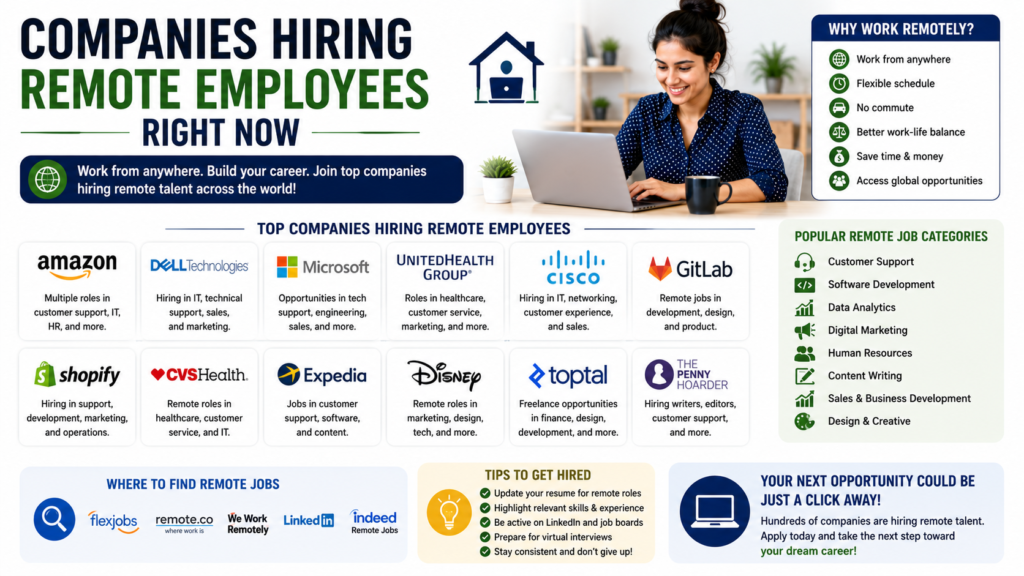

Remote work has become a permanent part of the global workforce, and in 2026 more companies than ever are hiring employees to work from home. Advances in cloud computing, artificial intelligence, video conferencing, and digital collaboration.
From technology startups and multinational corporations to customer service providers and marketing agencies, organizations across almost every industry are embracing remote hiring. Whether you are a recent graduate, an experienced professional, a freelancer, or someone looking for a career change, remote employment offers flexibility, improved work-life balance, and access to opportunities that were once limited by geography.
Amazon
Amazon regularly recruits remote employees for positions including:
- Customer service
- Human resources
- Software engineering
- Cloud computing
- Project management
Many opportunities are location-dependent.
Microsoft
Microsoft offers remote opportunities in:
- Software engineering
- Artificial intelligence
- Product management
- Technical support
- Sales
Remote work remains an important part of its workforce strategy.
Google continues expanding hybrid and remote opportunities for selected roles including:
- Engineering
- UX design
- Marketing
- Cloud services
- Data analytics
Salesforce
Salesforce hires remote professionals in:
- Customer success
- Sales
- Marketing
- Software development
- Technical consulting
Dell Technologies
Dell has supported flexible work for many years.
Remote careers include:
- IT
- Sales
- Cybersecurity
- Customer support
6. GitLab
GitLab operates as a fully remote company with employees worldwide.
Popular positions include:
- Engineering
- Marketing
- Finance
- Human resources
Automattic
Automattic, the company behind WordPress.com, hires remote employees globally.
Roles include:
- Developers
- Designers
- Customer support
- Marketing
HubSpot
HubSpot offers flexible remote opportunities in:
- Sales
- Marketing
- Customer success
- Software engineering
Shopify
Shopify continues supporting remote-first employment.
Opportunities include:
- Product management
- Software development
- Customer experience
Airbnb
Airbnb offers remote and flexible work arrangements for numerous corporate roles.
Canva
Canva hires remote professionals in:
- Design
- Engineering
- Marketing
- Product development
Zapier
Zapier operates with a distributed workforce across many countries.
Common roles include:
- Engineering
- Customer support
- Marketing
- Operations
Toptal
Toptal connects skilled freelancers with businesses worldwide.
Popular categories include:
- Software development
- Design
- Finance
- Project management
Upwork
Upwork allows freelancers to work remotely with clients around the world.
Popular services include:
- Writing
- Programming
- Marketing
- Design
GitHub
GitHub frequently recruits remote professionals for:
- Engineering
- Product management
- Security
- Developer advocacy
Adobe
Adobe offers remote positions in:
- Creative technology
- Software engineering
- Marketing
- Product management
Oracle
Oracle hires remote professionals in cloud technology, consulting, engineering, and sales.
Cisco
Cisco continues expanding remote hiring across networking, cybersecurity, and technical support.
Zoom
Zoom recruits remote employees in engineering, customer success, marketing, and business operations.
Atlassian
Atlassian supports distributed teams and hires globally for engineering, design, product management, and customer support.
Common Remote Job Categories
Many companies recruit for:
- Customer service
- Virtual assistance
- Software development
- Digital marketing
- Graphic design
- Data analysis
- Human resources
- Project management
- Content writing
- Sales
These positions remain among the most widely available.
Skills Employers Want
Remote employers commonly seek:
- Communication
- Time management
- Problem-solving
- Adaptability
- Collaboration
- Computer literacy
Professionalism is equally important.
Build a Competitive Resume
An effective remote resume should highlight:
- Relevant skills
- Certifications
- Remote work experience
- Technical knowledge
- Project achievements
Tailor each application to the specific position.
Create a Professional Portfolio
Depending on your profession, include:
- Writing samples
- Design projects
- Software applications
- Marketing campaigns
- Case studies
Portfolios demonstrate practical ability.
Prepare for Virtual Interviews
Remote interviews often assess:
- Communication skills
- Technical abilities
- Time management
- Independent working style
Practice using video conferencing tools before interviews.
Avoid Remote Job Scams
Protect yourself by:
- Applying through official company websites
- Verifying recruiters
- Avoiding upfront payment requests
- Researching employers carefully
Legitimate employers do not charge application fees.
Keep Learning
Technology changes rapidly.
Learning areas include:
- Artificial intelligence
- Cybersecurity
- Cloud computing
- SEO
- Data analytics
- Project management
Continuous improvement increases employability.
Source Links
Conclusion
The number of companies hiring remote employees continues to grow in 2026, creating exceptional opportunities for professionals across nearly every industry. Leading organizations such as Amazon, Microsoft, Google, Salesforce, GitLab, Shopify, HubSpot, Canva, Adobe, Cisco, and many others actively recruit remote talent for positions ranging from customer support and digital marketing to software engineering, cybersecurity, artificial intelligence, and project management. While competition for remote jobs remains strong, candidates who continuously improve their digital skills, build impressive portfolios, customize their resumes, and apply through trusted company career pages significantly increase their chances of success. Remote work is no longer a temporary trend—it has become a long-term career path that offers flexibility, professional growth, and access to global employment opportunities.
FAQ
1. Which companies hire remote employees most frequently?
Large organizations such as Amazon, Microsoft, Google, Salesforce, GitLab, Shopify, HubSpot, Canva, Adobe, Cisco, and many technology companies regularly recruit remote professionals.
2. Can beginners get hired for remote jobs?
Yes. Many companies offer entry-level remote positions in customer support, virtual assistance, content writing, data entry, sales, and administrative support.
3. Where can I find legitimate remote job openings?
Official company career pages, LinkedIn Jobs, Remote.co, and other trusted job platforms are among the safest places to search for remote opportunities.
4. What skills are most important for remote work?
Communication, organization, time management, digital literacy, problem-solving, adaptability, and collaboration are highly valued by remote employers.
5. Do remote companies hire internationally?
Many remote-first organizations hire globally, although eligibility depends on local employment laws, tax regulations, and company policies.
6. Are remote jobs full-time or freelance?
Remote opportunities include full-time employment, part-time positions, contract work, freelance projects, and consulting roles.
7. How can I stand out when applying for remote jobs?
Customize your resume, build a strong portfolio, earn relevant certifications, demonstrate remote communication skills, and prepare thoroughly for virtual interviews.
8. How can I avoid remote job scams?
Apply through official company websites, verify recruiters, avoid paying application fees, research employers, and never share sensitive financial information before confirming a job offer.


