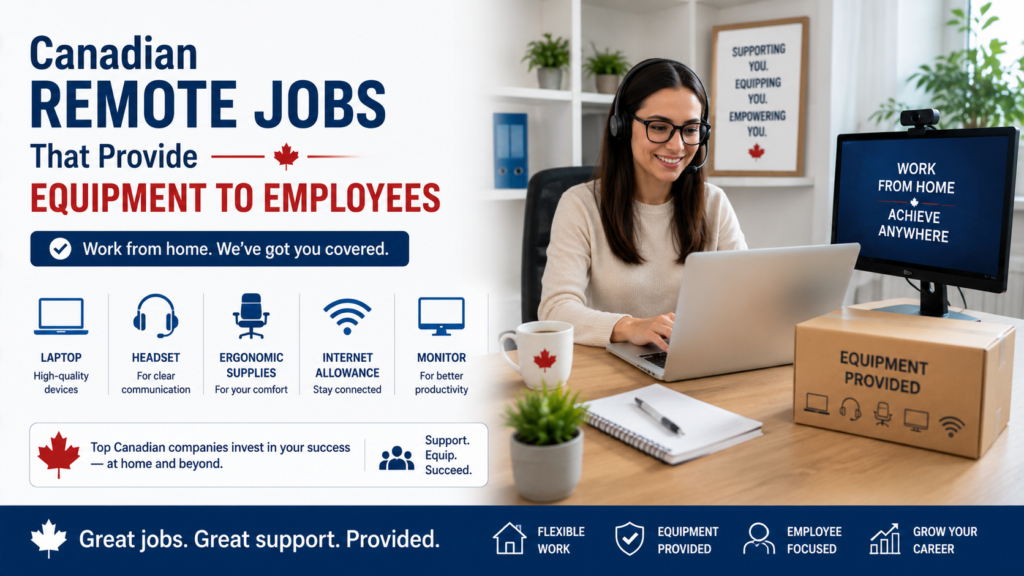

Discover the best Canadian remote jobs that provide equipment to employees. Learn which companies offer laptops, monitors, and home office support, plus salaries, required skills, and where to find legitimate work-from-home opportunities in Canada.
Remote work has become a permanent part of Canada’s employment landscape, with many companies hiring employees to work from home. One of the biggest advantages of these positions is that some employers provide the equipment needed to perform the job effectively. Instead of purchasing expensive computers, monitors, or office accessories, employees receive company-issued devices that help them work securely and efficiently.
Canadian employers understand that providing proper equipment improves productivity, communication, and employee satisfaction. Whether you are looking for customer service, IT, marketing, administrative, or finance roles, many remote positions include laptops, headsets, monitors, or home office allowances. Knowing where to search and what employers typically provide can help you find legitimate remote jobs with excellent benefits.
What Are Remote Jobs That Provide Equipment?
These are work-from-home positions where employers supply the tools employees need to perform their duties.
Common equipment includes:
- Company laptop
- Desktop computer
- Monitor
- Keyboard and mouse
- Noise-canceling headset
- Webcam
- Security software
- Home office allowance
The equipment offered depends on the employer and the role.
Why Companies Provide Equipment
Many employers provide work equipment to ensure employees can perform their jobs safely and efficiently.
Benefits for employers include:
- Improved productivity
- Better cybersecurity
- Standardized technology
- Easier IT support
- Faster employee onboarding
- Better communication
- Increased employee satisfaction
- Compliance with company policies
Providing equipment also helps maintain consistent work standards across remote teams.
Best Canadian Remote Jobs That Often Provide Equipment
Many remote positions include company-issued hardware and software.
Popular options include:
1. Customer Service Representative
Responsibilities include:
- Handling customer inquiries
- Resolving complaints
- Processing orders
- Providing product information
Average salary: CAD $40,000–$60,000 per year
2. Technical Support Specialist
Typical duties include:
- Troubleshooting technical issues
- Assisting customers
- Documenting support requests
- Escalating complex problems
Average salary: CAD $50,000–$75,000 per year
3. Virtual Administrative Assistant
Common tasks include:
- Scheduling appointments
- Managing emails
- Preparing documents
- Organizing meetings
Average salary: CAD $45,000–$65,000 per year
4. Remote Bookkeeper
Responsibilities include:
- Recording financial transactions
- Preparing reports
- Managing invoices
- Reconciling accounts
Average salary: CAD $50,000–$75,000 per year
5. Digital Marketing Specialist
Typical duties include:
- Managing social media
- SEO optimization
- Content marketing
- Email campaigns
Average salary: CAD $55,000–$85,000 per year
6. Software Developer
Responsibilities include:
- Writing code
- Testing applications
- Fixing software bugs
- Collaborating with development teams
Average salary: CAD $80,000–$130,000 per year
7. Remote Recruiter
Recruiters often:
- Source candidates
- Conduct interviews
- Coordinate hiring
- Manage recruitment processes
Average salary: CAD $55,000–$90,000 per year
8. Payroll Administrator
Common responsibilities include:
- Processing payroll
- Managing employee records
- Preparing tax documents
- Maintaining payroll compliance
Average salary: CAD $55,000–$80,000 per year
Equipment Commonly Provided
Employers may provide:
- Laptop or desktop computer
- External monitor
- Wireless keyboard and mouse
- Professional headset
- Webcam
- Docking station
- VPN access
- Business software licenses
Some companies also offer a home office setup allowance.
Skills That Improve Your Chances
Having the right skills increases your chances of securing remote employment.
Useful skills include:
- Communication
- Time management
- Computer literacy
- Microsoft Office proficiency
- Google Workspace
- Customer service
- Problem-solving
- Organization
Technical positions may also require specialized software knowledge.
Where to Find Canadian Remote Jobs
Reliable job websites include:
- LinkedIn Jobs
- Indeed Canada
- Job Bank Canada
- Glassdoor
- Workopolis
- FlexJobs
- Remote OK
- We Work Remotely
Always apply through trusted job portals or the employer’s official careers page.
Tips for Finding Legitimate Remote Jobs
Follow these best practices:
- Research the employer before applying.
- Read the job description carefully.
- Verify the company’s official website.
- Never pay money to apply for a job.
- Watch for unrealistic salary promises.
- Use trusted job platforms.
- Prepare a professional resume.
- Customize your cover letter for each application.
Being cautious helps you avoid work-from-home scams.
Advantages of Equipment-Provided Remote Jobs
Working for employers that supply equipment offers several benefits.
Advantages include:
- Lower personal expenses
- Better work performance
- Access to professional technology
- Secure company systems
- Reliable technical support
- Easier onboarding
- Increased productivity
- Improved work-life balance
These benefits make remote work more accessible and efficient.
Source Links
Conclusion
Canadian remote jobs that provide equipment are an excellent option for professionals seeking flexible work without the cost of purchasing expensive office technology. Many employers supply laptops, monitors, headsets, and other essential tools to help employees work efficiently and securely from home. Roles in customer service, administration, bookkeeping, IT, marketing, recruitment, and software development frequently include company-issued equipment and competitive salaries.
By focusing on trusted job websites, developing relevant remote work skills, and applying through legitimate employers, you can increase your chances of finding a rewarding work-from-home position in Canada that includes the equipment needed for success.
Frequently Asked Questions (FAQs)
1. Do Canadian remote companies provide laptops?
Yes. Many Canadian employers provide company-issued laptops, especially for full-time remote positions.
2. What equipment is commonly provided for remote jobs?
Common equipment includes laptops, monitors, keyboards, mice, headsets, webcams, docking stations, VPN access, and required software.
3. Which remote jobs are most likely to include equipment?
Customer service, technical support, bookkeeping, software development, recruitment, payroll administration, and administrative assistant roles often provide work equipment.
4. Do all Canadian remote jobs provide equipment?
No. Some employers require employees to use their own devices, while others provide complete home office setups or equipment allowances.
5. Where can I find legitimate Canadian remote jobs?
Trusted websites include Job Bank Canada, LinkedIn Jobs, Indeed Canada, Glassdoor, Workopolis, FlexJobs, Remote OK, and We Work Remotely.
6. Can international applicants apply for Canadian remote jobs?
Some employers hire international remote workers, but many positions require applicants to have legal authorization to work in Canada. Always review the job requirements carefully.
7. Should I pay for equipment before starting a remote job?
No. Legitimate employers do not ask candidates to pay for company equipment or send money before employment begins.
8. What skills are important for Canadian remote jobs?
Communication, computer skills, time management, organization, customer service, problem-solving, and proficiency with digital collaboration tools are highly valued.