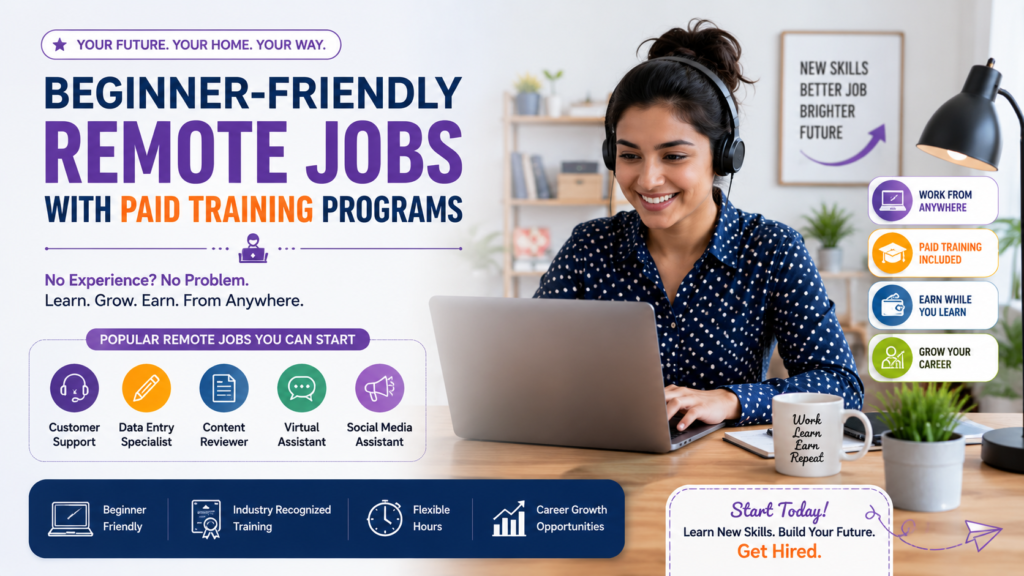

Discover beginner-friendly remote jobs with paid training programs. Learn about job roles, required skills, salary expectations, and how to find legitimate work-from-home opportunities for beginners.
Remote jobs with paid training programs are an excellent option for beginners who want to start working from home without extensive experience. Many companies provide structured onboarding and paid training to help new employees learn company processes, software, and job responsibilities before handling tasks independently. These opportunities allow candidates to build valuable skills while earning an income.
Whether you are a recent graduate, career changer, stay-at-home parent, or someone looking for flexible employment, beginner-friendly remote jobs can provide a strong foundation for long-term career growth.
What Are Remote Jobs With Paid Training?
These are work-from-home positions where employers pay employees while they complete training and onboarding.
Training may include:
- Company policies
- Job-specific responsibilities
- Customer service techniques
- Software and systems training
- Communication skills
- Compliance requirements
- Performance expectations
- Practical work simulations
Paid training allows beginners to gain confidence before taking on regular duties.
Why Choose Remote Jobs With Paid Training?
These positions offer several advantages for those starting their careers.
Benefits include:
- No extensive experience required
- Paid learning opportunities
- Flexible work environment
- Professional skill development
- Better work-life balance
- Career advancement opportunities
- Stable employment prospects
Training programs help employees succeed in their new roles.
Popular Beginner-Friendly Remote Jobs
Many entry-level remote positions include paid training.
Common opportunities include:
- Customer Service Representative
- Virtual Administrative Assistant
- Data Entry Clerk
- Technical Support Representative
- Chat Support Agent
- Email Support Specialist
- Sales Support Representative
- Appointment Scheduler
- Billing Support Assistant
- Content Moderator
These roles often focus on communication, organisation, and basic computer skills.
Skills Employers Look For
Most employers value transferable skills more than previous experience.
Important skills include:
- Good communication
- Basic computer literacy
- Time management
- Organisation
- Attention to detail
- Problem-solving
- Adaptability
- Willingness to learn
A positive attitude and reliability are highly valued.
Qualifications That May Be Required
Requirements vary depending on the employer.
Many beginner-friendly roles require:
- High school diploma or equivalent
- Basic computer skills
- Reliable internet connection
- Good written and verbal communication
- Ability to work independently
- Legal eligibility to work in the hiring country
Some positions may require additional assessments during the hiring process.
Industries Offering Paid Training
Many industries hire beginners and provide structured training.
Popular sectors include:
- Customer support
- Healthcare administration
- Financial services
- E-commerce
- Retail
- Technology
- Insurance
- Education
Demand for remote support roles continues to grow across these industries.
Salary Expectations
Salaries vary based on the employer, country, industry, and job responsibilities.
Typical entry-level earnings may include:
- Hourly roles: Competitive hourly wages based on local market rates
- Full-time positions: Entry-level salaries with opportunities for performance-based increases
- Some employers may also offer bonuses, paid leave, health benefits, retirement plans, or professional development opportunities.
Research salary expectations for your location before applying.
Software and Tools Commonly Used
Remote employees often work with digital collaboration and productivity tools.
Common tools include:
- Microsoft Office
- Google Workspace
- Zoom
- Microsoft Teams
- Slack
- CRM software
- Project management platforms
- Cloud storage systems
Most employers provide training on their internal systems.
How to Prepare for a Beginner Remote Job
You can improve your chances of getting hired by:
- Building basic computer skills
- Improving communication abilities
- Learning professional email etiquette
- Practising video interview skills
- Creating a well-organised resume
- Becoming familiar with common workplace software
Preparation helps you feel more confident during the hiring process.
Tips for Finding Legitimate Remote Jobs
Protect yourself by applying through trusted sources.
Helpful tips include:
- Apply through reputable job websites
- Visit official company career pages
- Research employers before accepting offers
- Never pay upfront fees for employment
- Read job descriptions carefully
- Verify recruiter information
- Keep your professional profile updated
Legitimate employers provide clear information about training and compensation.
Career Growth Opportunities
Starting in an entry-level remote position can lead to long-term career advancement.
Possible career paths include:
- Senior Customer Support Representative
- Team Leader
- Operations Coordinator
- Quality Assurance Specialist
- Virtual Office Manager
- Training Coordinator
- Project Coordinator
- Customer Success Manager
Continuous learning and strong performance can open new opportunities.
Sources
- https://www.indeed.com
- https://www.linkedin.com/jobs
- https://www.flexjobs.com
- https://www.remote.co
- https://www.glassdoor.com
Conclusion
Beginner-friendly remote jobs with paid training programs provide an excellent opportunity to gain valuable work experience while learning new professional skills. These roles allow individuals with little or no experience to start a remote career in industries such as customer service, administration, healthcare support, finance, and technology.
By developing strong communication skills, improving computer literacy, and applying through reputable employers, beginners can increase their chances of securing legitimate work-from-home opportunities. Paid training programs not only help employees succeed in their current roles but also create a solid foundation for long-term career growth.
Frequently Asked Questions (FAQs)
1. What are beginner-friendly remote jobs with paid training?
These are work-from-home positions where employers provide paid training to help new employees learn job responsibilities, company systems, and workplace procedures before beginning regular work.
2. Can I get a remote job without experience?
Yes. Many employers hire beginners for entry-level remote positions and provide paid training, especially in customer service, administration, support, and data entry roles.
3. What skills do employers look for in beginners?
Common skills include communication, basic computer literacy, organisation, time management, attention to detail, adaptability, and a willingness to learn.
4. Which industries offer remote jobs with paid training?
Customer service, healthcare administration, finance, retail, e-commerce, technology, insurance, and education frequently offer entry-level remote opportunities with training.
5. Do companies provide equipment for remote jobs?
Some employers provide equipment such as laptops or headsets, while others require employees to use their own devices. Always review the job description for specific requirements.
6. How can I find legitimate remote jobs?
Apply through reputable job boards, official company career pages, and established recruitment agencies. Avoid employers requesting upfront payments or personal financial information during the application process.
7. Are paid training programs available for full-time and part-time jobs?
Yes. Some employers offer paid training for both full-time and part-time remote positions, depending on the role and company policies.
8. Can remote entry-level jobs lead to career growth?
Yes. With experience and strong performance, employees can progress into supervisory, specialist, training, operations, or management roles.