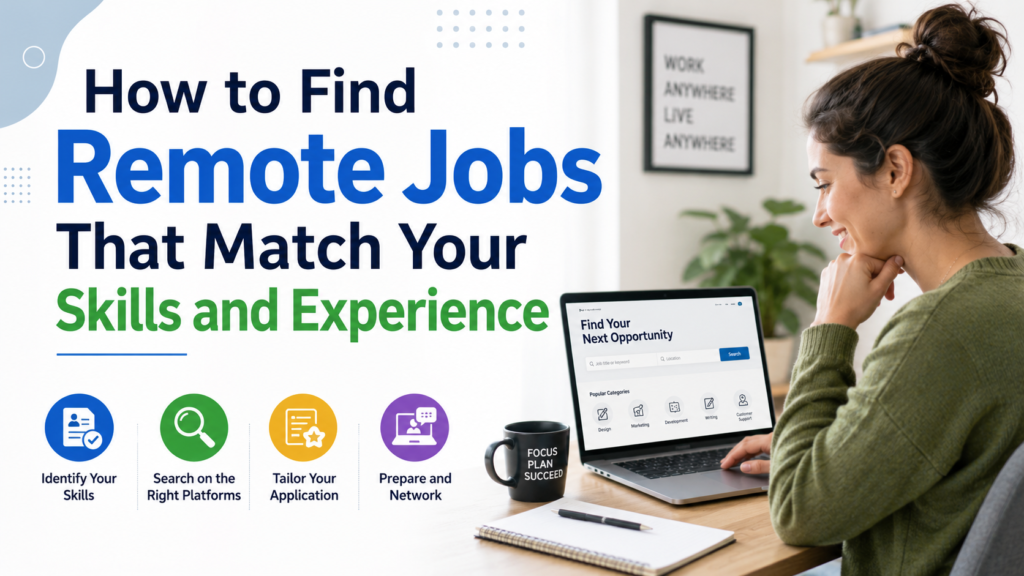

Learn how to find remote jobs that match your skills and experience. Discover the best job platforms, application tips, resume strategies, and ways to secure legitimate work-from-home opportunities.
Remote work has transformed the way people build their careers. Whether you are a fresh graduate, a working professional seeking flexibility, or someone looking for a better work-life balance, remote jobs offer countless opportunities. However, finding the right remote job is not just about applying to every work-from-home position you see online. The key is to find opportunities that align with your skills, experience, and career goals.
Many job seekers struggle because they either apply for roles that don’t match their expertise or fail to highlight their strengths effectively. The good news is that with the right approach, you can identify remote jobs that suit your background and increase your chances of getting hired.
In this guide, we’ll explore practical strategies to help you find remote jobs that truly match your skills and experience.
Understand Your Skills and Strengths
Before searching for remote jobs, take some time to evaluate your abilities.
Ask yourself:
- What technical skills do I have?
- What industries have I worked in?
- What tasks do I enjoy doing most?
- What problems can I solve for employers?
For example, if you have experience in customer service, you might be a good fit for remote customer support roles. If you have writing skills, content writing and copywriting positions could be ideal. Similarly, professionals with expertise in programming, graphic design, accounting, marketing, or project management can find numerous remote opportunities.
Create a list of both hard skills and soft skills.
Hard Skills Examples:
- Content Writing
- Web Development
- Graphic Design
- Data Analysis
- Digital Marketing
- Accounting
Soft Skills Examples:
- Communication
- Time Management
- Problem Solving
- Leadership
- Team Collaboration
Understanding your strengths helps you target the right opportunities instead of wasting time on unsuitable jobs.
Identify Remote-Friendly Career Fields
Some industries offer more remote opportunities than others.
Popular remote-friendly fields include:
Technology
Software development, cybersecurity, IT support, and data science roles are frequently remote.
Marketing
Digital marketers, SEO specialists, social media managers, and PPC experts often work remotely.
Writing and Content Creation
Blog writing, copywriting, technical writing, and editing jobs are widely available.
Customer Support
Many companies hire remote customer service representatives and support agents.
Education
Online tutoring, teaching, and course creation have become increasingly popular.
Finance and Accounting
Bookkeeping, financial analysis, and accounting roles are often offered remotely.
Knowing which industries embrace remote work can help narrow your search.
Use Specialized Remote Job Platforms
Many people rely only on traditional job portals. However, specialized remote job boards can provide better opportunities.
Some popular platforms include:
- FlexJobs
- We Work Remotely
- Remote.co
- Remote OK
- LinkedIn Jobs
- Indeed
- Upwork
- Fiverr
- Freelancer
When using these platforms, filter jobs based on your experience level, skills, and preferred working hours.
For example, if you are an experienced digital marketer, search specifically for remote SEO specialist or content marketing manager roles rather than browsing all categories.
Optimize Your Resume for Remote Positions
A strong resume is crucial for remote job applications.
Employers want evidence that you can work independently and manage responsibilities without constant supervision.
Highlight Remote-Relevant Skills
Include skills such as:
- Self-motivation
- Time management
- Virtual communication
- Project management
- Collaboration tools
Mention Remote Work Experience
If you’ve worked remotely before, clearly state it.
Example:
“Managed content creation projects remotely while collaborating with international clients through Slack and Zoom.”
Use Keywords
Many employers use applicant tracking systems (ATS).
Include keywords from job descriptions such as:
- Remote work
- Virtual collaboration
- Work from home
- Distributed teams
- Online communication
This improves your chances of passing automated screening systems.
Build a Strong LinkedIn Profile
LinkedIn is one of the most powerful tools for remote job seekers.
To improve your profile:
- Use a professional photo.
- Write a compelling headline.
- Add relevant skills.
- Showcase achievements.
- Request recommendations.
- Enable the “Open to Work” feature.
A well-optimized LinkedIn profile can attract recruiters searching for remote talent.
For example:
Instead of writing:
“Marketing Professional”
Write:
“Digital Marketing Specialist | SEO Expert | Content Strategist | Helping Brands Grow Online”
This makes your expertise more visible.
Create an Online Portfolio
A portfolio can significantly improve your chances of getting hired.
Depending on your profession, your portfolio may include:
Writers
- Published articles
- Blog posts
- Case studies
Designers
- Logos
- Website designs
- Branding projects
Developers
- Websites
- Applications
- GitHub repositories
Marketers
- Campaign results
- Analytics reports
- SEO case studies
Employers often trust demonstrated skills more than claims on a resume.
Network With Industry Professionals
Networking remains one of the most effective ways to find jobs.
Join:
- LinkedIn groups
- Facebook communities
- Professional associations
- Industry forums
- Remote work communities
Engage in discussions and share valuable insights.
For example, a content writer participating in SEO groups may discover freelance opportunities before they’re publicly advertised.
Many remote jobs are filled through referrals and professional connections.
Research Companies That Hire Remote Workers
Instead of waiting for job postings, proactively identify companies known for remote work.
Research organizations that support distributed teams and flexible work arrangements.
Look for:
- Remote-first companies
- International startups
- Digital agencies
- SaaS companies
- Online education platforms
Visit their careers pages regularly and subscribe to job alerts.
Being proactive can help you discover opportunities before the competition.
Customize Every Job Application
One common mistake is sending the same resume and cover letter to every employer.
Tailor each application by:
- Matching skills to job requirements.
- Using relevant keywords.
- Highlighting specific achievements.
- Explaining why you’re a strong fit.
For example:
If a job requires project management experience, emphasize projects you’ve successfully managed rather than focusing on unrelated tasks.
Customized applications often receive more attention from recruiters.
Prepare for Remote Job Interviews
Remote interviews differ from traditional interviews.
Employers want to know whether you can work effectively without direct supervision.
Common interview questions include:
- How do you manage your time?
- How do you stay productive while working remotely?
- What tools have you used for remote collaboration?
- How do you handle communication challenges?
Prepare examples that demonstrate your ability to work independently and solve problems.
Also ensure:
- A stable internet connection
- A quiet environment
- Professional appearance
- Familiarity with video conferencing tools
Avoid Remote Job Scams
Unfortunately, remote job scams are common.
Warning signs include:
- Requests for upfront payments
- Unrealistic salary promises
- Vague job descriptions
- No company information
- Pressure to make quick decisions
Always research employers before applying.
Check:
- Company website
- LinkedIn page
- Employee reviews
- Online reputation
Legitimate employers do not ask candidates to pay money to get hired.
Keep Learning and Upgrading Your Skills
The remote job market is highly competitive.
Continuous learning can help you stand out.
Consider improving skills through:
- Online courses
- Certifications
- Workshops
- Industry webinars
Popular areas for skill development include:
- Digital Marketing
- Artificial Intelligence
- Data Analytics
- Cybersecurity
- Web Development
- Project Management
The more valuable your skills become, the more remote opportunities you’ll attract.
Stay Consistent and Patient
Finding the perfect remote job may take time.
Create a structured routine:
- Search daily
- Apply consistently
- Network regularly
- Update your resume
- Improve your skills
Many successful remote professionals submitted dozens of applications before receiving their ideal opportunity.
Persistence often leads to better results.
Sources
https://l1nq.com/8ilopgg
https://l1nq.com/4jrbp7s
Conclusion
Finding remote jobs that match your skills and experience requires a strategic approach rather than random applications. Start by understanding your strengths, targeting remote-friendly industries, optimizing your resume and LinkedIn profile, and building a strong professional network. Use specialized remote job platforms, tailor each application, and continuously upgrade your skills to stay competitive. With patience, consistency, and the right strategy, you can secure a remote position that aligns with your career goals and provides the flexibility and freedom many professionals seek today.
Frequently Asked Questions (FAQs)
1. What are the best websites to find remote jobs?
Some of the best platforms include FlexJobs, We Work Remotely, Remote.co, LinkedIn Jobs, Indeed, Upwork, Fiverr, and Remote OK.
2. How can I make my resume attractive for remote jobs?
Highlight remote work skills such as communication, time management, self-discipline, and experience with collaboration tools like Zoom, Slack, and Trello.
3. Are remote jobs legitimate?
Yes, many legitimate companies offer remote positions. However, always research employers carefully and avoid jobs that require upfront payments.
4. Do remote jobs pay well?
Many remote jobs offer competitive salaries. Fields such as software development, digital marketing, project management, and content creation often provide excellent compensation.
5. Can freshers get remote jobs?
Yes. Entry-level roles such as virtual assistant, customer support representative, content writer, data entry specialist, and online tutor are often suitable for beginners.