
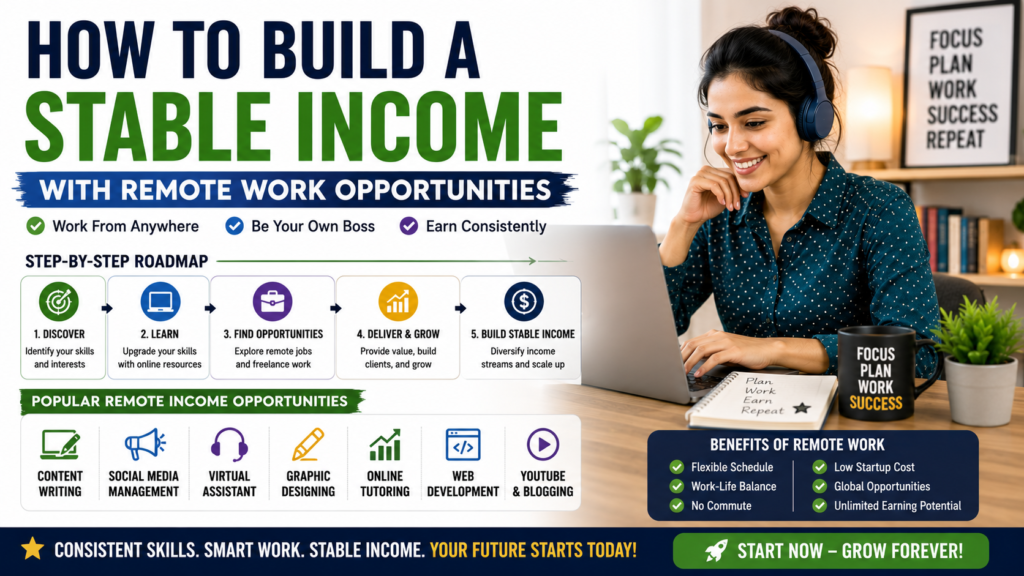

The rise of remote work has transformed the modern job market, creating countless opportunities for people to earn a stable income from anywhere in the world. What started as a temporary solution for many businesses has evolved into a long-term employment model that offers flexibility, independence, and access to global opportunities. In 2026, remote work continues to grow rapidly, making it possible for individuals to build reliable and sustainable income streams without commuting to a traditional office.
Why Remote Work Is Becoming the Future of Employment
Businesses worldwide are embracing remote work because it reduces operational costs, increases employee satisfaction, and provides access to a larger talent pool. Employees benefit from flexible schedules, improved work-life balance, and opportunities to work for companies located anywhere in the world.
Whether you are a student, freelancer, stay-at-home parent, recent graduate, or professional seeking greater flexibility, remote work can provide a pathway to financial stability. However, building a consistent income requires more than simply finding a remote job. It involves developing valuable skills, creating multiple income sources, maintaining professionalism, and continuously adapting to changing market demands.
This comprehensive guide explores how to build a stable income with remote work opportunities, the best remote careers to pursue, strategies for long-term success, and practical steps to maximize your earning potential.
Benefits of Remote Work
- Flexible working hours
- Reduced transportation costs
- Improved work-life balance
- Access to international opportunities
- Increased productivity
- Better income diversification
- Ability to work from any location
These advantages make remote work an attractive option for individuals seeking financial security and career growth.
Understanding Stable Income in Remote Work
A stable income means earning enough money consistently to cover living expenses, savings goals, and future financial plans. Unlike traditional employment, remote workers often have greater control over their earnings but must actively manage their careers.
Building stability requires:
- Consistent client or employer relationships
- Reliable work opportunities
- Strong professional skills
- Effective financial planning
- Continuous learning and development
The goal is to create dependable income streams that can withstand economic changes and industry shifts.
Step 1: Identify High-Demand Remote Careers
Choosing the right career path is one of the most important steps toward stable remote income.
Content Writing
Content writers create blogs, articles, website content, and marketing materials for businesses.
Average Earnings
$30,000 to $100,000+ annually
Digital Marketing
Digital marketers help companies generate traffic, leads, and sales through online strategies.
Average Earnings
$40,000 to $120,000+ annually
Software Development
Developers create websites, applications, and software solutions.
Average Earnings
$70,000 to $150,000+ annually
Virtual Assistance
Virtual assistants provide administrative support to businesses and entrepreneurs.
Average Earnings
$500 to $5,000+ monthly
Graphic Design
Designers create visual content for branding, marketing, and digital platforms.
Average Earnings
$20 to $100+ per hour
Data Analysis
Data analysts help organizations make informed decisions using business data.
Average Earnings
$60,000 to $130,000+ annually
These careers offer strong demand and long-term growth potential.
Step 2: Develop Valuable Skills
Remote workers who possess in-demand skills have greater earning potential and job security.
Skills Worth Learning in 2026
- Search Engine Optimization (SEO)
- Content Writing
- Digital Marketing
- Social Media Management
- Graphic Design
- Video Editing
- Programming
- Data Analysis
- Artificial Intelligence Tools
- Project Management
Investing time in skill development increases competitiveness and opens doors to better opportunities.
Step 3: Build a Professional Online Presence
A strong online presence helps attract employers and clients.
Create a LinkedIn Profile
A professional LinkedIn profile showcases your skills, experience, and achievements.
Build a Portfolio
A portfolio demonstrates your abilities through real work samples.
Maintain Professional Profiles
Freelancing platforms, personal websites, and industry-specific communities can increase visibility.
Employers often evaluate online profiles before making hiring decisions.
Step 4: Diversify Your Income Sources
One of the best ways to build stable income is by creating multiple revenue streams.
Freelance Work
Provide services to multiple clients instead of relying on a single source of income.
Part-Time Remote Employment
Combine freelance work with part-time remote jobs.
Affiliate Marketing
Earn commissions by promoting products and services online.
Blogging
Generate income through advertising, sponsorships, and affiliate partnerships.
Online Courses
Create educational content and earn passive income from course sales.
Diversification reduces financial risk and improves long-term stability.
Step 5: Build Long-Term Client Relationships
Stable income often comes from repeat clients rather than constantly searching for new projects.
Deliver High-Quality Work
Meeting or exceeding expectations increases client satisfaction.
Communicate Professionally
Clear communication helps build trust and credibility.
Meet Deadlines
Reliability is one of the most valued traits in remote work.
Offer Additional Value
Suggest improvements and solutions that benefit clients.
Strong relationships often lead to referrals and recurring projects.
Step 6: Master Time Management
Remote work requires self-discipline and effective organization.
Create a Schedule
Set specific working hours each day.
Use Productivity Tools
Project management tools can help track tasks and deadlines.
Minimize Distractions
Create a dedicated workspace to improve focus.
Set Goals
Daily, weekly, and monthly goals help maintain consistent progress.
Good time management directly impacts income potential.
Step 7: Continue Learning and Adapting
The digital economy evolves rapidly, making continuous learning essential.
Stay Updated
Follow industry news and emerging trends.
Earn Certifications
Professional certifications can increase credibility.
Learn New Technologies
Artificial intelligence, automation, and digital tools continue transforming remote work.
Expand Your Expertise
Additional skills can open higher-paying opportunities.
Professionals who continuously improve remain competitive in changing markets.
Common Challenges of Remote Work
While remote work offers many advantages, there are challenges to overcome.
Income Fluctuations
Freelancers may experience variable earnings.
Isolation
Working alone can reduce social interaction.
Distractions
Home environments can impact productivity.
Client Acquisition
Finding new clients requires consistent effort.
Developing strong habits and systems can help address these challenges effectively.
Financial Planning for Remote Workers
Stable income also depends on proper financial management.
Build an Emergency Fund
Save enough money to cover several months of expenses.
Track Income and Expenses
Monitor financial performance regularly.
Invest in Skill Development
Education often provides significant long-term returns.
Plan for Taxes
Remote workers should understand their tax responsibilities.
Strong financial planning creates greater stability and peace of mind.
Future of Remote Work Opportunities
The future of remote work remains extremely promising. Businesses continue investing in remote infrastructure, digital collaboration tools, and global hiring practices. Advances in artificial intelligence, cloud computing, and automation are creating entirely new categories of remote jobs.
Professionals who develop valuable skills, adapt to technological changes, and maintain strong client relationships will enjoy growing opportunities and sustainable income for years to come.
Source
https://www.linkedin.com
https://www.indeed.com
https://www.upwork.com
https://www.flexjobs.com
https://www.glassdoor.com
Conclusion
Building a stable income through remote work opportunities is achievable for individuals willing to invest in skill development, professionalism, and continuous learning. By choosing high-demand careers, diversifying income streams, building strong client relationships, managing time effectively, and staying adaptable, remote workers can create reliable and long-term financial success. As remote work continues to expand in 2026 and beyond, those who embrace the opportunities available today can enjoy greater flexibility, independence, and financial freedom.
FAQ
1. Can remote work provide a stable full-time income?
Yes, many professionals earn stable full-time incomes through remote employment, freelancing, consulting, and online businesses.
2. What are the best remote careers for long-term income?
Software development, digital marketing, content writing, graphic design, project management, and data analysis offer strong long-term earning potential.
3. How can I increase my remote work income?
Develop in-demand skills, diversify income sources, build a strong portfolio, and maintain excellent client relationships.
4. Is remote work suitable for beginners?
Yes, many entry-level remote jobs such as virtual assistance, customer support, content writing, and data entry are beginner-friendly.
5. What skills are most valuable for remote work in 2026?
SEO, digital marketing, programming, AI tools, project management, content creation, and data analysis are among the most valuable skills.


