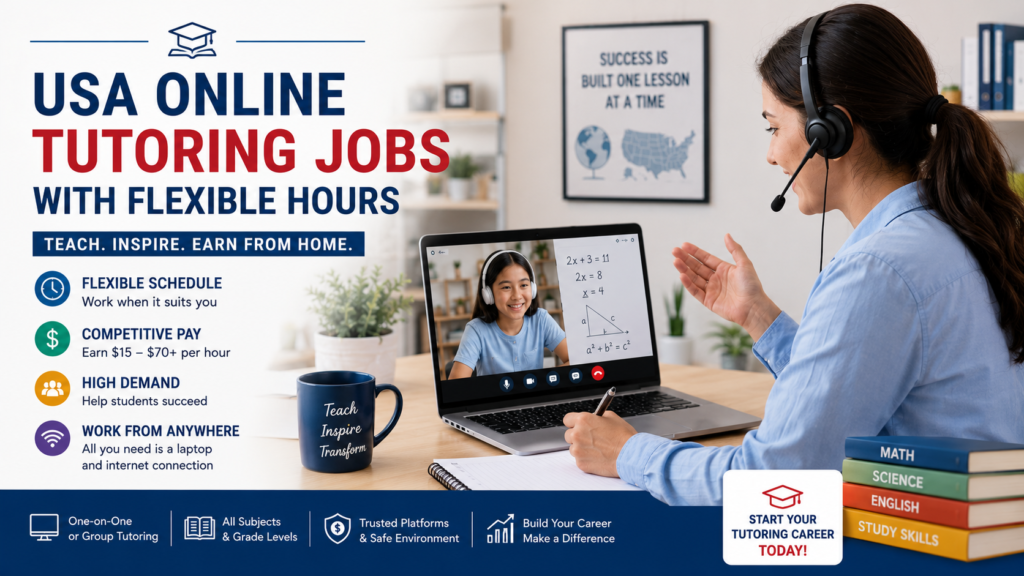

Discover the best USA online tutoring jobs with flexible hours. Learn about salaries, qualifications, trusted tutoring platforms, and how to start a remote tutoring career in 2026.
Online tutoring has become one of the fastest-growing work-from-home careers in the United States. With students increasingly learning through digital platforms, schools, educational companies, and private clients are seeking qualified tutors who can teach from anywhere with a reliable internet connection. Whether you are a certified teacher, college student, recent graduate, or subject expert, online tutoring offers flexible working hours and competitive earning potential.
Unlike traditional classroom teaching, online tutoring allows professionals to create their own schedules, work with students from different locations, and teach subjects they enjoy. Many tutoring companies also provide lesson materials and technical support, making it easier for beginners to get started.
This guide explains everything you need to know about USA online tutoring jobs with flexible hours, including qualifications, salaries, platforms, and tips for success.
What Is an Online Tutoring Job?
An online tutor teaches students through virtual learning platforms using video conferencing, digital whiteboards, and educational resources.
Common responsibilities include:
- Teaching academic subjects
- Helping with homework
- Preparing students for exams
- Explaining difficult concepts
- Monitoring student progress
- Providing learning feedback
- Creating lesson plans
- Encouraging student confidence
Tutoring sessions may be one-on-one or in small groups.
Why Online Tutoring Is a Great Remote Career
Online tutoring offers numerous benefits.
Advantages include:
- Flexible working hours
- Work from home
- Choose your own schedule
- Teach subjects you enjoy
- Part-time or full-time opportunities
- High demand
- Good earning potential
- Career satisfaction
It is ideal for individuals seeking work-life balance.
Subjects in High Demand
Many tutoring platforms hire tutors for a wide variety of subjects.
Popular subjects include:
- Mathematics
- English
- Science
- Biology
- Chemistry
- Physics
- History
- Geography
- Computer Science
- Foreign Languages
Specialized subjects often command higher hourly rates.
Skills Needed for Online Tutoring
Successful tutors typically possess:
- Strong communication skills
- Subject expertise
- Patience
- Time management
- Organization
- Problem-solving abilities
- Basic computer skills
- Adaptability
The ability to explain concepts clearly is especially important.
Educational Requirements
Requirements vary by employer.
Common qualifications include:
- High school diploma (some platforms)
- Bachelor’s degree
- Teaching certification (preferred by some companies)
- College enrollment (student tutoring positions)
- Subject expertise
Private tutoring often has more flexible qualification requirements.
Can Beginners Become Online Tutors?
Yes. Many tutoring companies hire beginners who demonstrate strong academic knowledge and communication skills.
Beginners can improve their chances by:
- Choosing subjects they know well
- Completing online teaching courses
- Practicing virtual teaching
- Building confidence through volunteer tutoring
Experience develops over time.
Average Salary in the USA
Pay depends on experience, subject, and tutoring platform.
Typical earnings include:
| Experience | Estimated Hourly Rate |
|---|---|
| Beginner | $15–$25 |
| Experienced | $25–$45 |
| Specialized Subjects | $40–$70+ |
| Private Tutors | Varies by client |
Private tutoring often offers higher earning potential.
Types of Online Tutoring Jobs
Available opportunities include:
- Academic tutoring
- Test preparation tutoring
- Language tutoring
- College tutoring
- Homework assistance
- Adult education
- ESL tutoring
- Private tutoring
Many tutors combine multiple types of tutoring.
Best Platforms for Online Tutoring Jobs
Trusted tutoring platforms include:
- Tutor.com
- Wyzant
- Varsity Tutors
- Preply
- Cambly
- Chegg Tutors (where available)
- Skooli
- Study.com
- Outschool
- Superprof
Research each platform’s requirements before applying.
Equipment Needed
Most online tutoring jobs require:
- Reliable internet connection
- Laptop or desktop computer
- Webcam
- Headset with microphone
- Quiet workspace
- Video conferencing software
A professional setup improves the learning experience.
How to Get Hired
Increase your chances of success by:
- Creating a professional resume
- Highlighting subject expertise
- Demonstrating communication skills
- Completing tutor profiles carefully
- Recording an introduction video if requested
- Applying to multiple platforms
- Practicing mock tutoring sessions
Professional presentation helps attract employers and students.
Freelance Tutoring Opportunities
Many tutors choose to work independently.
Freelance tutoring offers:
- Flexible pricing
- Personal branding
- Long-term student relationships
- Schedule control
- Higher income potential
Satisfied students often recommend tutors to others.
Tips for Becoming a Successful Online Tutor
Successful tutors typically:
- Prepare lessons in advance
- Encourage student participation
- Use interactive teaching methods
- Provide constructive feedback
- Track student progress
- Maintain professional communication
- Continue improving subject knowledge
- Stay patient and supportive
Consistency helps build a strong reputation.
Common Interview Questions
Employers may ask:
- Why do you want to become an online tutor?
- Which subjects do you teach?
- How do you explain difficult concepts?
- How do you motivate students?
- How do you handle struggling learners?
- What technology have you used for online teaching?
Preparing answers improves interview confidence.
The Future of Online Tutoring
Digital education continues to expand through virtual classrooms, artificial intelligence, personalized learning platforms, and interactive educational tools. As online learning becomes more common, demand for qualified tutors is expected to remain strong. Tutors who continue improving their teaching methods and technology skills will enjoy growing opportunities in the education sector.
Sources
Conclusion
USA online tutoring jobs with flexible hours provide an excellent opportunity for teachers, students, graduates, and subject experts to earn income while helping others succeed academically. With increasing demand for online education, flexible schedules, and numerous tutoring platforms, remote tutoring offers a rewarding career path for individuals who enjoy teaching. By developing strong communication skills, building subject expertise, and consistently delivering quality instruction, tutors can create successful long-term careers from home.
Frequently Asked Questions (FAQs)
1. Can I work as an online tutor from home in the USA?
Yes. Many educational companies and tutoring platforms hire remote tutors who teach students online.
2. Do I need teaching experience?
Not always. Many platforms accept beginners who demonstrate strong subject knowledge and communication skills.
3. Which subjects are most popular?
Mathematics, English, science, computer science, and foreign languages are consistently in demand.
4. How much do online tutors earn?
Most tutors earn between $15 and $45 per hour, while specialists and private tutors may earn significantly more.
5. Do I need a teaching license?
Some employers require teaching credentials, but many tutoring platforms accept qualified subject experts without formal teaching licenses.
6. What equipment do I need?
A computer, reliable internet connection, webcam, headset, and quiet workspace are usually required.
7. Can college students become tutors?
Yes. Many college students tutor subjects they excel in and work flexible schedules around their studies.
8. Where can I find legitimate tutoring jobs?
Trusted platforms include Tutor.com, Wyzant, Varsity Tutors, Preply, Cambly, Outschool, and Superprof.
9. Is online tutoring a good long-term career?
Yes. Demand for online education continues to grow, creating stable opportunities for qualified tutors.
10. How can I become a successful online tutor?
Develop strong teaching skills, communicate clearly, prepare engaging lessons, track student progress, and continue learning new educational techniques.