
Discover the best work from home bookkeeping jobs in the USA. Learn about salaries, required skills, qualifications, trusted job websites, and how to start a remote bookkeeping career in 2026.
Remote work has transformed the accounting and finance industry, making bookkeeping one of the most popular work-from-home careers in the United States. Businesses of every size—from startups to large corporations—need skilled bookkeepers to manage financial records, reconcile accounts, process invoices, and maintain accurate financial data. Thanks to cloud-based accounting software, many bookkeeping tasks can now be completed entirely online.
Whether you’re looking for a full-time remote career, a flexible side income, or an entry-level opportunity with room for growth, bookkeeping offers excellent possibilities. Many employers provide training for beginners, while experienced bookkeepers can earn competitive salaries working from home.
This guide explains everything you need to know about work from home bookkeeping jobs in the USA, including responsibilities, qualifications, salaries, where to find jobs, and tips for getting hired.
What Is a Remote Bookkeeping Job?
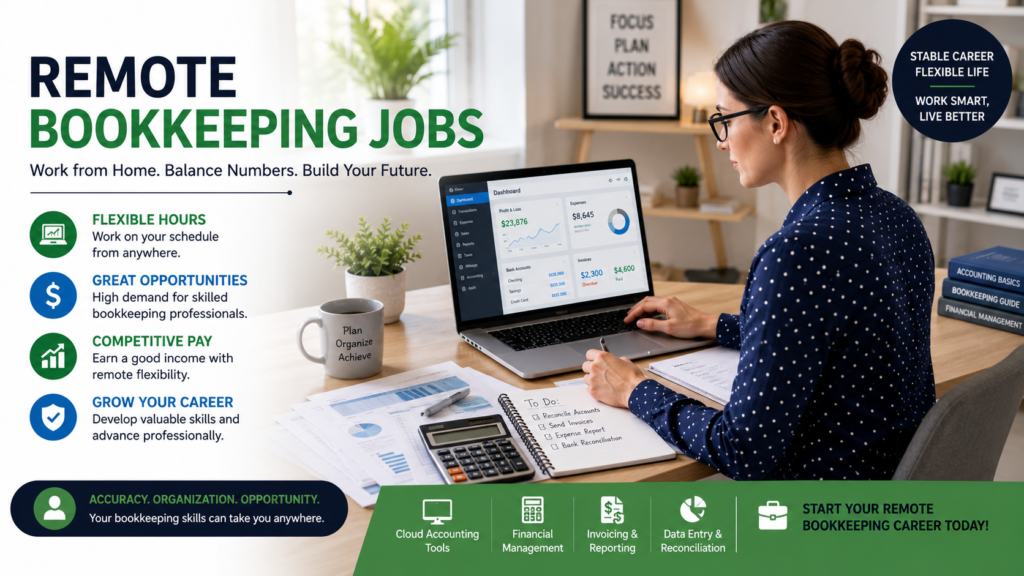
A remote bookkeeper manages a company’s financial records from home using online accounting software and communication tools.
Typical responsibilities include:
- Recording financial transactions
- Managing accounts payable and receivable
- Reconciling bank statements
- Processing invoices
- Preparing financial reports
- Tracking expenses
- Organizing receipts and documents
- Assisting accountants during tax season
Most work is completed using cloud-based accounting platforms.
Why Bookkeeping Is a Great Remote Career
Bookkeeping continues to be one of the most reliable remote careers.
Benefits include:
- Work from anywhere
- Flexible schedules
- Consistent demand
- Stable income
- Opportunities for freelancers
- Full-time and part-time positions
- Career advancement
- Work-life balance
Many businesses outsource bookkeeping, creating continuous hiring opportunities.
Skills Needed for Remote Bookkeeping
Successful remote bookkeepers typically possess:
- Basic accounting knowledge
- Attention to detail
- Organizational skills
- Time management
- Accuracy
- Computer proficiency
- Communication skills
- Problem-solving ability
Employers also value reliability and professionalism.
Popular Bookkeeping Software
Many companies require familiarity with accounting software such as:
- QuickBooks Online
- Xero
- FreshBooks
- Sage Accounting
- Wave Accounting
- Zoho Books
- Microsoft Excel
Learning these tools improves employability.
Educational Requirements
Many bookkeeping jobs require:
- High school diploma
- Associate degree (preferred by some employers)
- Accounting or finance coursework
- Bookkeeping certifications (optional but beneficial)
Experience often matters more than formal education.
Can Beginners Become Bookkeepers?
Yes. Many companies hire entry-level bookkeepers who demonstrate:
- Strong organizational skills
- Basic accounting understanding
- Willingness to learn
- Computer proficiency
- Attention to detail
Completing online bookkeeping courses can strengthen your resume.
Average Salary in the USA
Salary depends on experience, employer, and workload.
Typical earnings include:
| Experience | Estimated Annual Salary |
|---|---|
| Beginner | $38,000–$48,000 |
| Mid-Level | $48,000–$65,000 |
| Experienced | $65,000–$85,000+ |
| Freelance | Varies by clients and projects |
Freelancers may increase earnings by serving multiple clients.
Types of Remote Bookkeeping Jobs
Common remote opportunities include:
- Full-time bookkeeper
- Part-time bookkeeper
- Freelance bookkeeping
- Contract bookkeeping
- Virtual bookkeeping assistant
- Small business bookkeeper
- Corporate bookkeeping specialist
Each offers different levels of flexibility.
Industries Hiring Remote Bookkeepers
Bookkeepers are needed in nearly every industry.
Common employers include:
- Accounting firms
- Healthcare organizations
- E-commerce businesses
- Construction companies
- Nonprofit organizations
- Law firms
- Retail businesses
- Real estate companies
- Marketing agencies
- Technology companies
Financial recordkeeping is essential across all sectors.
Best Websites to Find Bookkeeping Jobs
Trusted websites include:
- Indeed
- LinkedIn Jobs
- FlexJobs
- Remote.co
- We Work Remotely
- ZipRecruiter
- Glassdoor
- Robert Half
- Upwork
- Fiverr
Use keywords such as “Remote Bookkeeper,” “Virtual Bookkeeper,” and “Work From Home Bookkeeping.”
How to Increase Your Chances of Getting Hired
Improve your job prospects by:
- Learning QuickBooks Online
- Practicing Excel skills
- Completing bookkeeping certifications
- Building a professional resume
- Creating a LinkedIn profile
- Gaining freelance experience
- Applying consistently
- Preparing for interviews
Practical experience often makes candidates more competitive.
Freelance Bookkeeping Opportunities
Many professionals choose freelance bookkeeping because it offers:
- Flexible working hours
- Multiple income sources
- Client independence
- Higher earning potential
- Remote work flexibility
Freelancing platforms can help beginners build experience.
Common Interview Questions
Employers may ask:
- Why do you want to become a bookkeeper?
- Which accounting software have you used?
- How do you stay organized?
- How do you maintain accuracy?
- How do you handle confidential financial information?
- How do you prioritize multiple tasks?
Preparing thoughtful answers increases confidence.
Tips for Working Successfully From Home
Remote bookkeepers should:
- Create a dedicated workspace
- Maintain organized records
- Meet deadlines consistently
- Communicate professionally
- Back up important files
- Protect confidential information
- Continue learning new software
- Stay updated on accounting practices
Good work habits improve productivity and client satisfaction.
The Future of Remote Bookkeeping
Cloud accounting, automation, artificial intelligence, and digital financial systems continue to reshape bookkeeping. While technology automates repetitive tasks, skilled bookkeepers remain essential for reviewing financial data, ensuring accuracy, solving problems, and supporting business decision-making. Professionals who continue learning modern accounting software and digital finance tools will enjoy strong career opportunities in the coming years.
Sources
Conclusion
Work from home bookkeeping jobs in the USA provide an excellent opportunity for individuals seeking stable remote careers with flexible schedules and strong earning potential. Businesses across every industry need organized, detail-oriented professionals to manage financial records and support daily operations. By learning popular accounting software, developing bookkeeping skills, and applying through trusted job platforms, beginners and experienced professionals alike can build successful remote bookkeeping careers.
Frequently Asked Questions (FAQs)
1. Can I work as a bookkeeper from home in the USA?
Yes. Many businesses hire remote bookkeepers to manage financial records using cloud-based accounting software.
2. Do I need experience to become a remote bookkeeper?
Not always. Some employers hire beginners who have basic accounting knowledge and are willing to learn.
3. Which software should I learn first?
QuickBooks Online and Microsoft Excel are among the most widely used tools.
4. How much do remote bookkeepers earn?
Annual salaries typically range from $38,000 to over $85,000 depending on experience and employer.
5. Can I freelance as a bookkeeper?
Yes. Many bookkeepers work independently with multiple clients through freelance platforms or personal referrals.
6. What qualifications are required?
A high school diploma is often sufficient, although accounting education or bookkeeping certifications can improve job opportunities.
7. Are remote bookkeeping jobs flexible?
Yes. Many employers offer flexible schedules, especially for part-time and freelance positions.
8. Where can I find legitimate bookkeeping jobs?
Trusted platforms include Indeed, LinkedIn Jobs, FlexJobs, Remote.co, ZipRecruiter, and Robert Half.
9. Is bookkeeping a good long-term career?
Yes. Every business requires financial recordkeeping, making bookkeeping a stable and in-demand profession.
10. How can beginners improve their chances of getting hired?
Learn accounting software, complete online bookkeeping courses, build a strong resume, and apply consistently through reputable job websites.